Mango packing app:
Mango packing app: for fresh mango packing, orders, sales, traceability, QC and shipping mangoes. Mango packing management for value adding, export, and mango quality inspection. Mango packing app for easy, fast, and efficient mango packing for fresh mango, dried, mango pulp, mango juice. Reduce mango waste, increase mango traceability. Fill every order order accurately.

Mango Packing App for accurate order filling & production
View Packing App Specifications.
Packhouse practices for mango packing and processing:
Farmsoft helps your packhouse adhere to practices that cover activities from the moment the mangos arrive in the packhouse to the moment of transport and export to the intended market.
Sorting, grading, packing and cooling are among the main activities. It is very important that the packhouse has sufficient capacity to cool the mangos; as good temperature management is a requirement to maintain a good quality of horticultural produce.
Furthermore, proper cleaning and sanitizing of building and equipment is part of good packhouse practices.
The processing of mangos at the packhouse facility must be well regulated and controlled. The process of washing, hot-water treatment (if applicable), sizing and grading is usually carried out through an automated system, such as roller conveyors with adjustable speed, but always well supervised. Cooling of the products should follow immediately. Forced air cooling is an effective tool to quickly lower the fruit temperature. However, mangos should not be stored below their critical temperature, as chilling injury may then occur which would result in risk of discolored mangos, or skin and flesh degradation leading to flavor and color loss.

Managing mango packing ripeness for mango supply chains
Mangos are one of the most popular fruits in the world. That should provide a huge opportunity for retailers however, many consumers still consider this tropical fruit ethnic and exotic.
Mangos barely ranked 20th in fruits sold by volume at retail in 2017, according to data provided by the Orlando, FL-headquartered National Mango Board (NMB). Said another way, the mango’s contribution to total produce dollars is small — only 0.41 percent for the 52 weeks ending Dec. 30, 2017, based on Nielsen Perishables Group information supplied by the NMB. Overcoming seasonal, varietal, ripeness, display, educational and promotional challenges that can hamper maximum mango register rings are ways U.S. retailers can jump on the global bandwagon and turn the mango category into a potent profit center.
“We see mangos as a valuable tool to growing total produce department sales,” says Michael Vesely, senior produce buyer at Jewel-Osco, a 186-store chain based in Itasca, IL, and a wholly owned subsidiary of the Albertsons Companies. Vesely was named 2017 Mango Retailer of the Year by the NMB. “One of the great things about promoting mangos is they do not steal sales from another item in the department. When we promote an item like a 10-pound russet potato or a honeycrisp apple, it kills the other items in the category. When we promote mangos, there is nothing they are stealing sales from. As we continue to grow the category, we have seen customers, who typically haven’t given mangos a glance, will pick them up.”
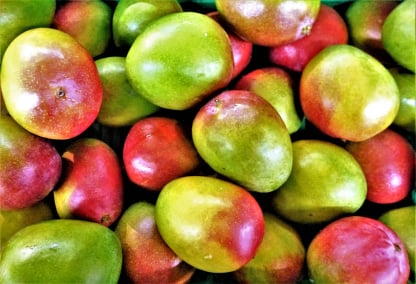
Mango packing app helps mitigate challenges in the mango packing industry
The mango is one of the most ancient and important tropical fruits packed and available globally.
Major challenges faced by mango exporters include high international freight charges, difficulties in custom clearance, sanitary and phytosanitary (SPS) measures, unavailability of quality mangoes in sufficient quantity, difficulties in certification, high local transportation charges, lack of standardization on post harvest handling, poor infrastructure facilities like cold storage, pack house, and competition from other exporters, lack of institutional support with respect to credit, problems finding reliable foreign distributor, unavailability of market information, price fluctuation of the mango supply in home countries, problems in quoting prices with fluctuating exchange rates, labelling and packaging requirements, confusing foreign import regulations and the unavailability or untimely provision export incentives.